Introduction to Lung Cancer
Lung Cancer Early Signs are often subtle, yet recognizing them early can save lives. Many people ignore mild symptoms, thinking they are just common respiratory issues. However, early detection can significantly improve survival rates. Therefore, understanding these signs is crucial.
Lung cancer is one of the leading causes of cancer-related deaths worldwide. Moreover, its cases are rising due to factors like smoking, pollution, and lifestyle changes. Early diagnosis gives patients more treatment options and better outcomes.
In this article, you will learn about symptoms, causes, risk factors, and prevention methods. So, let’s begin by understanding what lung cancer actually is.
What is Lung Cancer?
Definition of Lung Cancer
Lung cancer is a disease where abnormal cells grow uncontrollably in the lungs. These cells do not function like normal cells. Instead, they form tumors that interfere with breathing.
Types of Lung Cancer
There are two main types:
- Non-Small Cell Lung Cancer (NSCLC)
This is the most common type, accounting for about 85% of cases. - Small Cell Lung Cancer (SCLC)
This type spreads faster and is strongly linked to smoking.
How Lung Cancer Progresses
Initially, cancer starts in the lung tissues. However, if not treated, it can spread to other parts of the body such as:
Therefore, identifying Lung Cancer Early Signs is extremely important to stop progression.
Lung Cancer Early Signs You Should Not Ignore
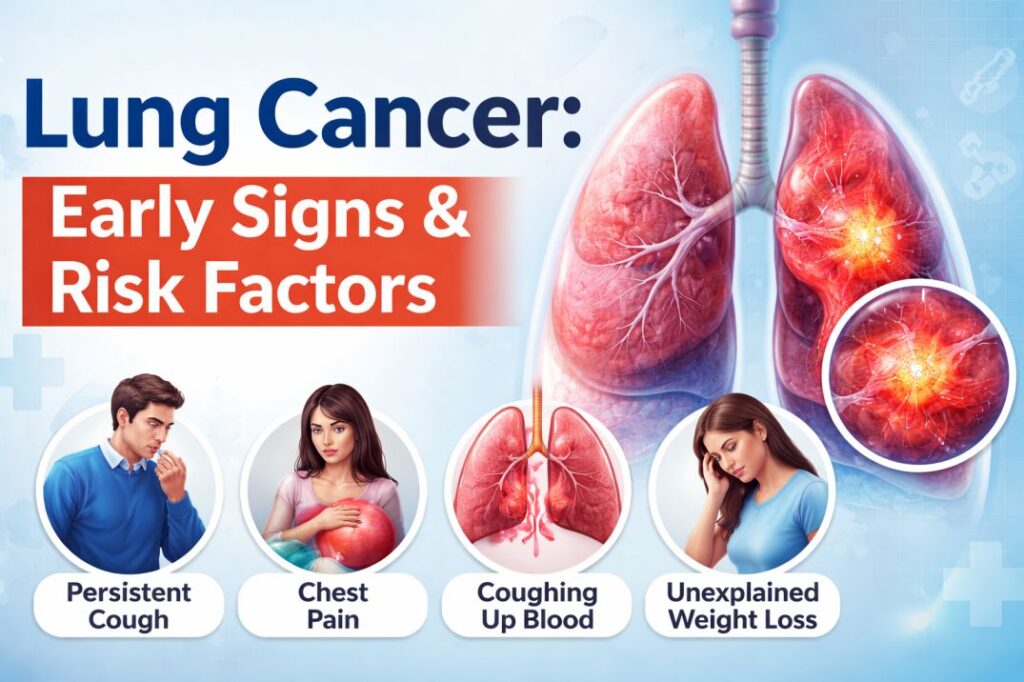
Recognizing early symptoms can make a big difference. Here are the most common warning signs:
Persistent Cough
A cough that does not go away is one of the most common signs. Moreover, if it worsens over time, it should not be ignored.
Shortness of Breath
If you feel breathless even during light activity, it may indicate lung problems. Therefore, consult a doctor early.
Chest Pain
Chest pain that worsens with coughing or deep breathing can be a warning sign. It is often overlooked but should be checked.
Unexplained Weight Loss
Losing weight without trying is a red flag. In addition, it may indicate that the body is fighting a serious illness.
Fatigue and Weakness
Feeling tired all the time without any reason can be an early symptom. Moreover, this fatigue does not improve with rest.
Coughing Up Blood (Hemoptysis)
Even small amounts of blood in mucus should be taken seriously. This is a critical warning sign.
Hoarseness of Voice
A change in voice or persistent hoarseness may indicate tumor growth affecting vocal cords.
Frequent Lung Infections
Repeated infections like bronchitis or pneumonia can signal underlying issues. Therefore, do not ignore recurring infections.
Advanced Lung Cancer Symptoms
When lung cancer progresses, symptoms become more severe.
Bone Pain
Cancer spreading to bones can cause severe pain, especially in the back and hips.
Headaches and Neurological Symptoms
If cancer reaches the brain, it may cause headaches, dizziness, or seizures.
Swelling in Face or Neck
Tumors can block blood flow, leading to swelling in these areas.
Jaundice
If cancer spreads to the liver, it may cause yellowing of the skin and eyes.
Major Risk Factors of Lung Cancer
Understanding risk factors helps in prevention.
Smoking (Primary Cause)
Smoking is the leading cause of lung cancer. Moreover, the risk increases with the number of cigarettes smoked.
Exposure to Radon Gas
Radon is a radioactive gas found in soil. Long-term exposure increases cancer risk.
Air Pollution
Polluted air contains harmful particles. Therefore, people living in urban areas face higher risks.
Occupational Hazards
Exposure to chemicals like asbestos can increase the risk significantly.
Genetic Factors
Family history plays a role. If a close relative has lung cancer, your risk increases.
Previous Lung Diseases
Diseases like tuberculosis or COPD can weaken lungs and increase vulnerability.
Who is at High Risk of Lung Cancer?
Age Factor
Lung cancer is more common in people above 50 years. However, younger individuals can also be affected.
Lifestyle Habits
Unhealthy habits such as smoking, poor diet, and lack of exercise increase risk.
Environmental Exposure
Living in polluted areas or working in hazardous environments raises risk levels.
Medical History
People with previous lung diseases should be more cautious.
Lung Cancer in Non-Smokers
Interestingly, non-smokers can also develop lung cancer.
Causes in Non-Smokers
- Secondhand smoke
- Pollution
- Genetic mutations
- Radon exposure
Why Cases Are Increasing
Modern lifestyles and environmental factors are contributing to rising cases among non-smokers.
Differences in Symptoms
Symptoms are often similar but may appear later, making diagnosis harder.
When Should You See a Doctor for Lung Cancer Symptoms?
Warning Signs That Need Immediate Attention
- Blood in cough
- Severe chest pain
- Sudden weight loss
- Persistent cough
Importance of Early Diagnosis
Early diagnosis increases survival chances. Moreover, treatment becomes more effective.
Screening Tests (CT Scan, X-ray)
Doctors may recommend:
These tests help detect cancer early.
How to Reduce the Risk of Lung Cancer
Quit Smoking
Stopping smoking is the most effective step. Even long-term smokers benefit from quitting.
Avoid Secondhand Smoke
Stay away from smoke-filled environments. It reduces your exposure to harmful toxins.
Improve Indoor Air Quality
Use air purifiers and ensure proper ventilation at home.
Healthy Diet and Exercise
A balanced diet and regular exercise strengthen the immune system.
Regular Health Checkups
Routine checkups help in early detection of Lung Cancer Early Signs.
Lung Cancer Prevention Tips for Daily Life
Practical Lifestyle Changes
- Eat fresh fruits and vegetables
- Stay physically active
- Avoid tobacco
Workplace Safety Tips
- Wear protective gear
- Follow safety guidelines
- Avoid toxic exposure
Home Safety Measures
- Test for radon gas
- Maintain clean air indoors
- Avoid smoking inside the house
Global Statistics of Lung Cancer
Worldwide Cases and Death Rates
Lung cancer accounts for millions of cases each year. Moreover, it remains the leading cause of cancer deaths globally.
Most Affected Countries
Countries with high smoking rates and pollution levels report more cases.
Trends Over the Years
Although awareness has increased, cases continue to rise due to environmental factors.
Myths and Facts About Lung Cancer
Common Misconceptions
- Only smokers get lung cancer
- Young people are not affected
- Symptoms always appear early
Scientific Facts
- Non-smokers can also develop lung cancer
- Early detection improves survival
- Symptoms may be silent initially
Conclusion: Why Early Detection of Lung Cancer Saves Lives
Understanding Lung Cancer Early Signs can make a life-saving difference. Many symptoms appear mild at first. However, ignoring them can lead to serious consequences.
Therefore, awareness, timely diagnosis, and lifestyle changes are key. By taking preventive steps and consulting doctors early, you can significantly reduce risks.
FAQs About Lung Cancer
What is the first sign of Lung Cancer?
The most common first sign is a persistent cough that does not go away.
Can non-smokers get Lung Cancer?
Yes, non-smokers can develop lung cancer due to pollution, genetics, and radon exposure.
Is Lung Cancer curable if detected early?
Yes, early-stage lung cancer can often be treated successfully with surgery and therapy.
How fast does Lung Cancer grow?
Growth rate varies. Some types grow quickly, while others progress slowly.
What are survival rates?
Survival rates depend on the stage. Early detection significantly improves survival chances.
Living with Mouth Cancer
Living with Mouth Cancer can be physically and emotionally challenging. However, proper support and treatment can help patients maintain a good quality of life.
Helpful strategies include:
Following the doctor’s treatment plan
Maintaining a nutritious diet
Joining cancer support groups
Seeking psychological counseling
Staying physically active
Moreover, family support plays a vital role in recovery and emotional strength.
Many survivors go on to live healthy and fulfilling lives after treatment.
Conclusion
In conclusion, understanding Lung Cancer Early Signs is not just helpful—it is truly life-saving. Many people, in fact, tend to ignore mild symptoms like a persistent cough or slight breathlessness. However, these early warnings should never be taken lightly. Therefore, paying close attention to your body becomes the first and most important step toward prevention.
Moreover, early detection significantly improves treatment outcomes as well as survival rates. When lung cancer is diagnosed at an early stage, doctors, consequently, have more effective options to control or even cure the disease. In addition, timely medical intervention can further prevent the cancer from spreading to other parts of the body.
On the other hand, ignoring symptoms can gradually lead to advanced stages, where treatment becomes more complex and less effective. Thus, awareness and regular health checkups play a crucial role. Furthermore, adopting a healthy lifestyle—such as quitting smoking, avoiding polluted environments, and maintaining good nutrition—can, in turn, greatly reduce the risk.
Equally important, non-smokers should also stay alert, as lung cancer is not limited to smokers alone. In fact, environmental factors and genetics also contribute significantly to the risk. Hence, everyone should remain cautious and well-informed at all times.
To sum up, recognizing Lung Cancer Early Signs, taking preventive measures, and seeking medical advice at the right time can truly make a difference. Ultimately, your health is in your hands; therefore, small proactive steps taken today can effectively protect your future.