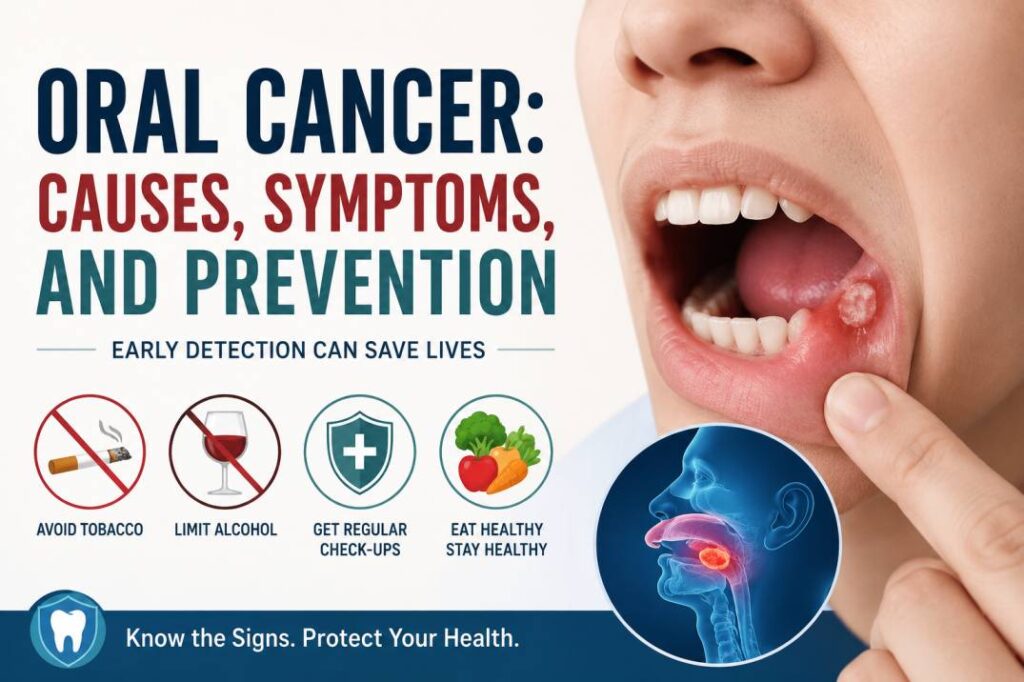
Oral Cancer is a serious health condition, and it affects thousands of people every year. Moreover, it can develop in the mouth, tongue, lips, gums, cheeks, or throat. Although many people connect mouth cancer with smoking, non-smokers can also develop this disease. Therefore, understanding the causes, symptoms, and prevention methods is very important. One major challenge with Oral Cancer is that early symptoms are often ignored. For example, a small sore, white patch, or mouth pain may seem harmless at first.
However, early detection can greatly improve the oral cancer survival rate. In addition, modern treatments work better when the disease is found early. In this detailed guide, you will learn about the causes and symptoms of oral cancer. Additionally, you will understand the risk factors, diagnosis methods, and treatment options. Finally, you will discover practical oral cancer prevention tips. As a result, you can better protect yourself and your loved ones.
Read About lung Cancer – Click here
What Is Oral Cancer?
Definition of Oral Cancer
Oral Cancer refers to cancer that develops in any part of the mouth or oral cavity. This includes:
- Lips
- Tongue
- Gums
- Inner cheeks
- Roof of the mouth
- Floor of the mouth
- Throat area
In most cases, Oral Cancer begins in the squamous cells lining the mouth. Therefore, it is commonly called squamous cell carcinoma.
The disease may grow slowly at first. However, if left untreated, it can spread to nearby tissues and lymph nodes.
Types of Oral Cancer
There are several types of mouth cancer, including:
1. Squamous Cell Carcinoma
This is the most common form of Oral Cancer. Squamous cell carcinoma is the most frequent type of oral cancer. In fact, it accounts for more than 90% of all cases. These cancers begin in the flat, scale-like cells that line the mouth and throat. Consequently, most tumors are found on the tongue, lips, or the floor of the mouth. Initially, these cells are healthy and flexible. However, repeated damage from tobacco or alcohol causes them to mutate.
2. Verrucous Carcinoma
A slow-growing cancer usually linked to tobacco use. Verrucous carcinoma is a specific subtype of squamous cell cancer. This type is generally slow-growing and rarely spreads to distant parts of the body. Furthermore, it is heavily linked to the use of chewing tobacco or snuff. As a result, it often appears as a white, wart-like growth on the gums or cheeks. While it is less aggressive than other forms, it still requires prompt medical intervention.
3. Minor Salivary Gland Cancer
This type of cancer develops in the salivary glands located inside the mouth. In particular, minor salivary gland cancer begins in the small glands scattered throughout the lining of the oral cavity. These glands are commonly found under the tongue, inside the cheeks, and in the hard palate. Furthermore, several different types of tumors can originate from these tissues. Among them, adenoid cystic carcinoma is considered one of the most common forms. In addition, these cancers may present as a firm, painless lump that grows over time.
4. Lymphoma
Sometimes cancer can affect lymph tissues in the oral region. Lymphoma is a cancer that begins in the immune system’s lymph tissues. The oral region contains significant lymphoid tissue, especially in the tonsils and the base of the tongue. Therefore, swelling in these areas can sometimes indicate a lymph-related malignancy. Because this is a systemic disease, it may require different treatments like chemotherapy or radiation. Overall, any persistent swelling in the back of the throat should be examined by a specialist.
How Common Is Oral Cancer?
Oral Cancer is becoming increasingly common worldwide. Men are generally at higher risk than women. However, cases among younger adults are also increasing due to HPV infection and lifestyle factors.
According to health experts, early diagnosis greatly improves treatment success. Therefore, regular oral cancer screening is highly recommended for people at risk.
Oral Cancer Causes and Risk Factors
Tobacco and Oral Cancer
Tobacco use is one of the leading oral cancer causes. Smoking cigarettes, cigars, or pipes significantly increases risk. In addition, chewing tobacco and gutkha are extremely harmful.
Tobacco contains cancer-causing chemicals that damage cells in the mouth over time. As a result, abnormal cell growth may begin.
Signs linked to tobacco and oral cancer include:
- Persistent mouth sores
- White or red patches
- Gum irritation
- Tongue lesions
Quitting tobacco can dramatically lower the risk of Oral Cancer.
Alcohol Consumption and Oral Cancer
Heavy alcohol consumption is another major risk factor. Alcohol irritates mouth tissues and weakens cell protection mechanisms.
Moreover, combining alcohol with tobacco greatly increases cancer risk. Therefore, people who smoke and drink heavily face a much higher chance of developing mouth cancer.
HPV Infection and Oral Cancer
Human papillomavirus (HPV), especially HPV-16, has been linked to Oral Cancer. This virus can spread through intimate contact.
HPV-related cancers often affect:
- The back of the tongue
- Tonsils
- Throat region
Furthermore, HPV-related Oral Cancer cases are rising among younger adults.
Poor Oral Hygiene and Oral Cancer
Poor oral hygiene may also contribute to Oral Cancer development. Chronic irritation from broken teeth, ill-fitting dentures, or gum disease can damage mouth tissues.
Maintaining proper dental care helps reduce inflammation and supports oral cancer prevention.
Sun Exposure and Lip Oral Cancer
Excessive sun exposure significantly increases the risk of lip cancer. As a result, people who work outdoors for long periods are often more exposed to harmful UV rays. Fortunately, using lip balm with SPF protection can help reduce this risk and protect the lips from sun damage.
Family History and Genetic Factors
Some people may inherit genetic mutations that increase cancer susceptibility. Therefore, a family history of cancer may raise Oral Cancer risk.
However, genetics alone usually do not cause the disease. Lifestyle factors also play a major role.
Diet and Nutritional Deficiencies
A poor diet lacking fruits and vegetables may weaken the immune system.
Deficiencies in vitamins such as:
- Vitamin A
- Vitamin C
- Iron
may contribute to oral tissue damage. Therefore, eating a balanced diet supports oral cancer prevention.
Early Signs and Symptoms of Oral Cancer
Common Oral Cancer Symptoms
Recognizing oral cancer symptoms at an early stage can greatly improve the chances of successful treatment and may even save lives.
Some of the most common symptoms include:
- Mouth sores that do not heal
- White or red patches inside the mouth
- Persistent mouth pain or discomfort
- Unexplained bleeding in the mouth
- Loose teeth without a clear cause
- Difficulty chewing or swallowing
In addition, some people may experience numbness in the mouth, jaw swelling, or a constant sore throat. Therefore, it is important to consult a healthcare professional if any of these symptoms persist for more than two weeks.
Moreover, some symptoms may appear mild in the beginning.
Pain and Difficulty While Eating or Swallowing
As Oral Cancer progresses, swallowing may become painful.
People may also experience:
- Difficulty chewing
- Food sticking in the throat
- Ear pain while swallowing
Therefore, persistent swallowing problems require medical attention.
Voice Changes and Jaw Problems
Oral Cancer may affect the throat and jaw muscles.
Possible symptoms include:
- Hoarseness
- Voice changes
- Jaw stiffness
- Swelling in the neck
In addition, some patients notice numbness around the mouth.
When to See a Doctor for Oral Cancer Symptoms
You should consult a doctor or dentist if symptoms last longer than two weeks.
Seek medical advice for:
- Non-healing sores
- Persistent pain
- Unexplained lumps
- Difficulty swallowing
- Bleeding in the mouth
Early diagnosis improves the oral cancer survival rate significantly.
How Oral Cancer Is Diagnosed
Physical Examination for Oral Cancer
Doctors usually begin with a physical examination.
They check for:
- Abnormal patches
- Mouth ulcers
- Neck lumps
- Tissue changes
Dentists often identify early signs during routine checkups.
Biopsy and Laboratory Tests
A biopsy is the most reliable way to diagnose Oral Cancer.
During this procedure:
- A small tissue sample is removed
- The sample is examined under a microscope
- Cancer cells are identified
Laboratory tests help determine cancer type and severity.
Imaging Tests for Oral Cancer
Imaging tests help doctors see how far the cancer has spread.
These may include:
- X-rays
- CT scans
- MRI scans
- PET scans
Furthermore, imaging helps plan oral- cancer treatment.
Oral Cancer Staging
Cancer staging describes how advanced the disease is.
Stages range from Stage 1 to Stage 4.
- 1 Stage : Small localized tumor – The cancer is in its earliest phase during Stage 1. Specifically, the tumor is usually 2 centimeters or smaller in diameter. Furthermore, the cancer has not yet reached any nearby lymph nodes or distant organs. Because the growth is contained, the prognosis is generally very positive. Consequently, surgical removal is often the primary treatment used.
- 2 Stage: Larger tumor- The tumor grows significantly larger as it enters Stage 2. At this point, the mass typically measures between 2 and 4 centimeters. However, the cancer remains localized to its original site in the mouth. Even though the tumor is bigger, it still hasn’t spread to the lymphatic system. Therefore, doctors closely monitor the surrounding tissues for any signs of change.
- 3 Stage: Spread to nearby lymph nodes- Stage 3 indicates that the cancer has become more aggressive. For instance, the tumor may now be larger than 4 centimeters in size. Alternatively, the cancer might have spread to a single lymph node on the same side of the neck. In addition, this stage marks a critical turning point in the complexity of the disease. As a result, patients often require a combination of surgery and radiation.
- 4 Stage: Advanced spread –
Stage 4 is the most serious and advanced classification of oral- cancer. First, the tumor may have invaded deep into nearby tissues like bone or skin. Second, the cancer often spreads to multiple lymph nodes or very large nodes. Most significantly, the disease might travel to distant organs such as the lungs or liver. Nevertheless, modern therapies continue to improve outcomes for patients at this stage.
Early-stage Oral -Cancer is easier to treat successfully.
Oral Cancer Treatment Options
Surgery for Oral Cancer
Surgery is one of the most common oral -cancer treatment methods.
The surgeon may remove:
- Tumors
- Affected tissues
- Lymph nodes
In severe cases, reconstructive surgery may be necessary.
Radiation Therapy for Oral Cancer
Radiation therapy uses high-energy beams to destroy cancer cells.
It may be used:
- After surgery
- Along with chemotherapy
- As the main treatment
However, side effects may include dry mouth and fatigue.
Chemotherapy and Oral Cancer
Chemotherapy uses powerful drugs to kill cancer cells.
Doctors may recommend chemotherapy when cancer has spread beyond the mouth.
Common side effects include:
- Nausea
- Hair loss
- Weakness
- Mouth sores
Targeted Therapy and Immunotherapy
Modern treatments now include targeted therapy and immunotherapy.
These therapies help the immune system fight cancer more effectively.
Moreover, targeted drugs attack cancer cells while minimizing damage to healthy tissues.
Recovery and Rehabilitation After Oral Cancer Treatment
Recovery may take weeks or months depending on treatment severity.
Patients may need:
- Speech therapy
- Nutritional support
- Dental rehabilitation
- Emotional counseling
Meanwhile, regular follow-up visits are essential.
Oral Cancer Prevention Tips
Quit Tobacco to Prevent Oral Cancer
Stopping tobacco use is the most effective prevention strategy.
Benefits of quitting include:
- Lower cancer risk
- Better oral health
- Improved immunity
Even long-term smokers benefit from quitting.
Limit Alcohol Consumption
Reducing alcohol intake can help protect oral tissues.
Therefore, moderation is important for oral -cancer prevention.
Maintain Good Oral Hygiene
Healthy oral habits reduce irritation and inflammation.
Important practices include:
- Brushing twice daily
- Flossing regularly
- Dental checkups
- Cleaning dentures properly
Healthy Diet for Oral Cancer Prevention
A healthy diet supports immune function and cell repair.
Include foods rich in:
- Fruits
- Vegetables
- Whole grains
- Antioxidants
Moreover, staying hydrated supports mouth health.
Protect Lips From UV Rays
Use SPF lip balm and avoid excessive sun exposure.
This is especially important for outdoor workers.
Regular Oral Cancer Screening
Regular oral- cancer screening helps detect problems early.
Dentists can identify suspicious lesions before symptoms worsen.
Therefore, yearly screenings are strongly recommended.
Oral Cancer Survival Rate and Prognosis
Survival Rates by Stage
The oral- cancer survival rate depends heavily on the stage at diagnosis.
- Early-stage cancer has a much higher survival rate
- Advanced cancer is harder to treat
Therefore, early detection is critical.
Factors Affecting Oral Cancer Prognosis
Several factors affect recovery chances:
- Cancer stage
- Tumor size
- Overall health
- Age
- Smoking habits
Furthermore, treatment response also influences prognosis.
Importance of Early Detection in Oral Cancer
Detecting Oral- Cancer early can save lives.
People who receive prompt treatment often experience:
- Better recovery
- Less aggressive treatment
- Improved quality of life
Regular dental visits play a major role in early diagnosis.
Living With Oral Cancer
Emotional Impact of Oral Cancer
A cancer diagnosis can affect mental health.
Patients may experience:
- Anxiety
- Depression
- Fear
- Social isolation
- The Weight of Diagnosis
A cancer diagnosis often triggers an immediate sense of shock. Consequently, many patients feel overwhelmed by the sudden change in their life path. Furthermore, the uncertainty of the future creates deep psychological stress. As a result, mental health must become a priority alongside physical care.
Common Emotional Struggles
Patients frequently face a wide range of difficult feelings. For instance, anxiety about treatment outcomes is a very common experience. Additionally, depression can settle in as the patient copes with changes in their appearance or speech. Because oral- cancer affects the face, many individuals feel a sense of fear regarding social interactions. Ultimately, these feelings can lead to a dangerous cycle of social isolation.
Coping and Support
Managing these emotions requires a dedicated strategy. Initially, many people find comfort in speaking with professional counselors or therapists. Moreover, joining a support group allows patients to connect with others facing similar battles. Indeed, sharing stories helps reduce the heavy feeling of loneliness. Therefore, seeking emotional support is an essential part of the healing journey.
Maintaining Quality of Life
Maintaining a positive outlook is difficult but helpful. In fact, focusing on small daily goals can provide a sense of control. Meanwhile, family members play a crucial role in providing a stable environment. By addressing mental health early, patients can improve their overall resilience. Thus, emotional wellness remains a cornerstone of comprehensive cancer care.
Therefore, emotional support is extremely important.
Diet and Lifestyle Changes During Recovery
Recovery often requires lifestyle adjustments.
Helpful changes include:
- Soft foods during healing
- Avoiding tobacco
- Limiting alcohol
- Staying active
In addition, hydration supports recovery.
Follow-Up Care After Oral Cancer Treatment
Follow-up care helps detect recurrence early.
Doctors may recommend:
- Regular scans
- Dental evaluations
- Nutrition monitoring
- Speech assessments
Patients should never skip follow-up appointments.
Read about Mouth Cancer – Click here
Frequently Asked Questions About Oral- Cancer
What are the first signs of Oral- Cancer?
Early signs of Oral- Cancer may include mouth sores, white patches, tongue pain, bleeding, or lumps that do not heal within two weeks.
Can Oral- Cancer be cured if detected early?
Yes. Early-stage Oral- Cancer is highly treatable. Therefore, early diagnosis significantly improves survival chances.
Is Oral- Cancer painful in the early stages?
Not always. Some early oral cancer symptoms may be painless, which is why regular oral- cancer screening is important.
How long does Oral- Cancer treatment take?
Treatment duration varies depending on cancer stage and treatment type. It may last several weeks to several months.
Who is most at risk for Oral- Cancer?
People who smoke, chew tobacco, consume alcohol heavily, or have HPV infection face higher risk.
Can non-smokers get Oral- Cancer?
Yes. Although tobacco is a major cause, non-smokers can also develop Oral- Cancer due to HPV, genetics, or other factors.
How can Oral Cancer be prevented?
You can reduce risk by:
- Avoiding tobacco
- Limiting alcohol
- Maintaining oral hygiene
- Eating healthy foods
- Getting regular screenings
Is Oral Cancer contagious?
No. Oral- Cancer itself is not contagious. However, HPV infection linked to some cases can spread between individuals.
Read about Breast Cancer: Causes, Symptoms, Stages, Treatment, and Prevention Guide- Click here
Final Thoughts on Oral Cancer Awareness
Oral- Cancer is a serious disease. However, in many cases, it can be prevented with the right lifestyle choices and early care. Therefore, understanding oral- cancer causes and recognizing oral- cancer symptoms early is extremely important.
Moreover, healthy habits can greatly reduce your risk. For example, avoiding tobacco, limiting alcohol, and maintaining good oral hygiene can protect your oral health. In addition, regular dental checkups help detect problems before they become serious.
Most importantly, early detection improves the chances of successful oral- cancer treatment. As a result, patients often experience better recovery outcomes and higher survival rates.
Call-to-Action
If you notice unusual mouth sores, pain, swelling, or changes in your mouth that last longer than two weeks, consult a doctor or dentist immediately. Meanwhile, do not ignore early warning signs, even if they seem minor.
Furthermore, share this guide with your family and friends to spread awareness about Oral- Cancer. Early awareness and regular oral- cancer screening can save lives.