Introduction
First of all, managing money can feel confusing when you are just starting out. However, creating a monthly budget is the simplest way to take control of your finances. In fact, a good budget helps you track your income, control your expenses, and save for your future goals. Moreover, many beginners think budgeting is complicated, but it is actually very simple when broken into steps. Therefore, in this guide, you will learn exactly how to create a monthly budget for beginners in an easy and practical way.
What is a Monthly Budget? Create a Monthly Budget
Simply put, a monthly budget is a plan for your money. In other words, it tells you how much money you earn and how much you spend each month. Additionally, it helps you decide where your money should go instead of wondering where it went. As a result, you gain better control over your financial life.
Why Budgeting is Important for Beginners
First, budgeting helps you avoid overspending. Secondly, it allows you to save money regularly. Moreover, it reduces financial stress because you know exactly what is happening with your money. Furthermore, it helps you achieve financial goals like buying a house, traveling, or building an emergency fund. Therefore, budgeting is not just a habit, but a powerful financial tool.
Step-by-Step Guide to Create a Monthly Budget
Step 1: Calculate Your Total Monthly Income
To begin with, you need to know how much money you earn. This includes your salary, freelance income, business income, or any side earnings. Additionally, make sure to calculate your income after taxes for accuracy. As a result, you will have a clear starting point for your budget.
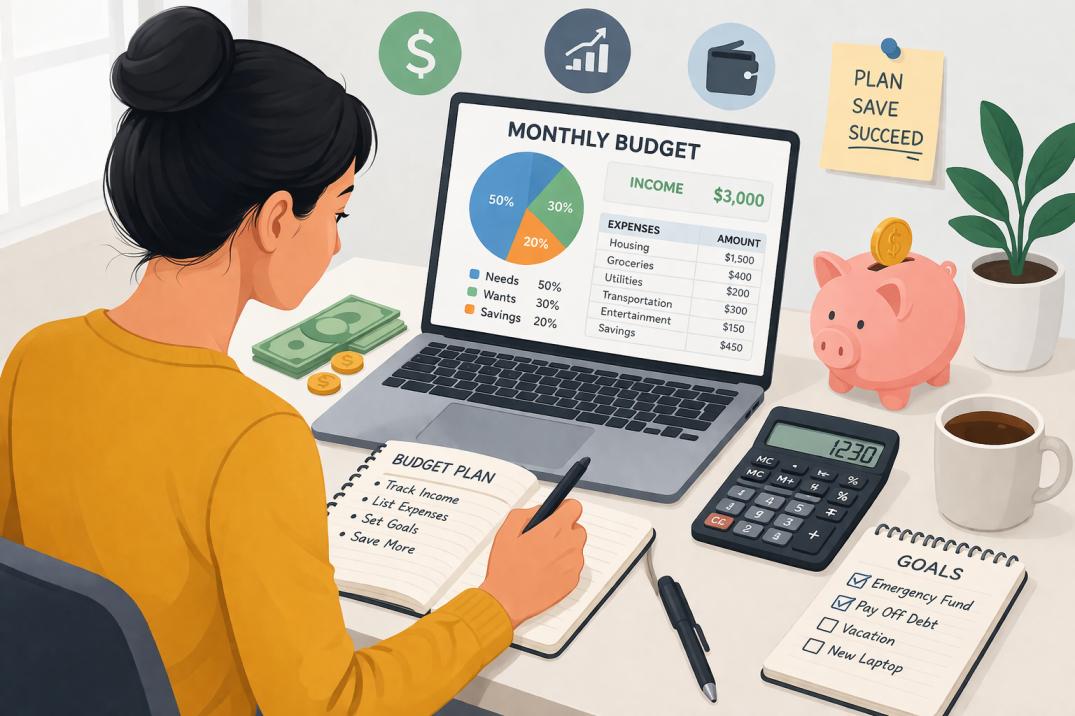
Step 2: Track Your Expenses and Create a Monthly Budget
Next, you should track all your expenses. For example, write down everything you spend money on for a month. This includes rent, groceries, bills, transportation, entertainment, and even small purchases. Moreover, you can use a notebook or an app to track your spending. Therefore, this step helps you understand your spending habits.
Step 3: Categorize Your Expenses
After that, divide your expenses into categories. For instance, you can create categories like:
- Fixed expenses (rent, EMI)
- Variable expenses (food, shopping)
- Savings and investments
As a result, you can clearly see where your money is going.
Step 4: Set Financial Goals
Now, it is important to set clear financial goals. For example, you may want to save for an emergency fund, pay off debt, or plan a vacation. Moreover, goals give direction to your budget. Therefore, always include both short-term and long-term goals.
Step 5: Create Your Monthly Budget Plan
At this stage, you can create your budget. Basically, allocate your income to different categories. One popular method is the 50/30/20 rule:
- 50% for needs
- 30% for wants
- 20% for savings
However, you can adjust this based on your situation. As a result, your money will be distributed wisely.
Make Money Online: Complete Guide for Beginners 2026
Step 6: Track and Adjust Your Budget
Finally, you should review your budget regularly. For instance, check weekly or monthly if you are following your plan. Moreover, adjust your budget if your income or expenses change. Therefore, budgeting becomes a continuous process.
Real-Life Example of a Monthly Budget
Let’s understand with a simple example.
Suppose your monthly income is ₹30,000:
- Needs (₹15,000): Rent, groceries, bills
- Wants (₹9,000): Eating out, shopping
- Savings (₹6,000): Emergency fund, investments
As a result, you can manage your money effectively without stress.
Common Mistakes to Avoid
Firstly, many beginners do not track small expenses. However, these small costs add up over time. Secondly, some people set unrealistic budgets, which leads to failure. Moreover, ignoring savings is another big mistake. Therefore, always keep your budget realistic and balanced.
Pro Tips for Better Budgeting
- Firstly, always pay yourself first by saving before spending
- Secondly, use budgeting apps for easy tracking
- Moreover, review your budget monthly
- Additionally, avoid unnecessary expenses
- Finally, stay consistent and disciplined
As a result, your budgeting skills will improve over time.
Frequently Asked Questions (FAQs)
1. How do I start budgeting with no experience?
To begin with, start by tracking your income and expenses. Then, create simple categories and follow a basic plan.
2. What is the best budgeting method for beginners?
Generally, the 50/30/20 rule is the easiest method for beginners. However, you can modify it based on your needs.
3. How much should I save every month?
Ideally, you should save at least 20% of your income. However, even small savings are better than none.
4. Can I budget with a low income?
Yes, absolutely. In fact, budgeting is even more important when your income is low.
5. How often should I review my budget?
You should review your budget at least once a month. Additionally, weekly checks can help you stay on track.
13 Things Poor People Do That Rich People Don’t – The Ultimate Guide to Building Wealth

Water Filtration Science Project: Complete Student Guide
Water Filtration Science Project A water filtration science project is a simple and interesting experiment that helps students understand how

Back to School Essay: A New Beginning for Students
Back to School Essay: A New Beginning for Students The end of summer vacation brings a special feeling to students.

How to Build a $100,000 Investment Portfolio From Scratch (2026)
Growing your first $100,000 can feel overwhelming. Maybe you’re wondering whether you should buy stocks, invest in ETFs, contribute more

Oral Cancer: Causes, Symptoms & Prevention Guide
Oral Cancer is a serious health condition, and it affects thousands of people every year. Moreover, it can develop in

Passive Income Ideas for Beginners With No Money (Start Today & Earn Smart)
Introduction Passive Income Ideas for Beginners With No Money. Everyone wants to earn money easily. However, most people think money is