Life is unpredictable; therefore, having an emergency fund is essential. In fact, it is no longer optional in today’s world. Whether it is a medical emergency, job loss, or sudden expense, you must be prepared.
So, the main question is: how much should you save in an emergency fund?
In this guide, you will not only learn the right amount but also understand how to build it step by step.
🟡 What Is an Emergency Fund?
First of all, an emergency fund is money saved for unexpected situations. In other words, it acts as a financial safety net.
For example, you may face sudden events like:
- Medical emergencies
- Job loss
- Home repairs
- Family needs
Therefore, instead of borrowing money, you can rely on your savings.
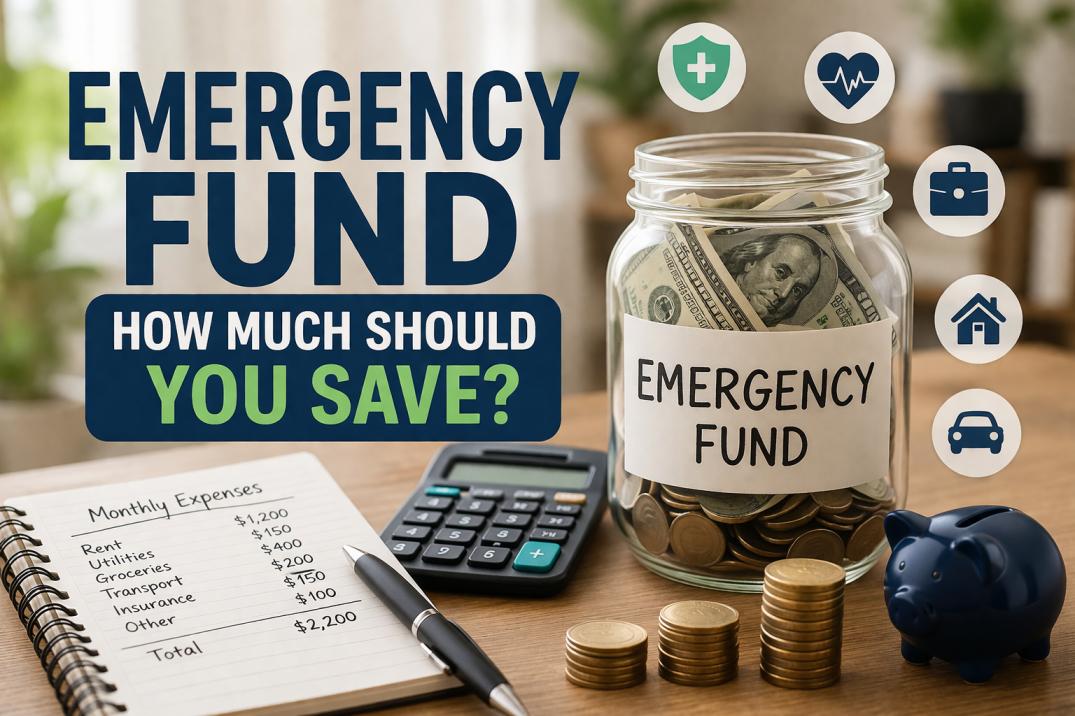
🔵 Why Is an Emergency Fund Important?
Nowadays, financial security is very important. However, many people still ignore emergency savings.
1. Protects You From Debt
If you don’t have savings, then you may take loans. As a result, your debt increases quickly.
2. Reduces Stress
Money problems create pressure. On the other hand, savings give you peace of mind.
3. Supports During Job Loss
If you lose your job, your expenses will continue. Therefore, an emergency fund becomes your support.
4. Builds Financial Confidence
Most importantly, you feel more secure and independent.
🟠 How Much Should You Save in an Emergency Fund?
Now, let’s answer the main question clearly.
✅ The Basic Rule: 3 to 6 Months of Expenses
Generally, experts recommend saving 3 to 6 months of your monthly expenses.
👉 For example:
- Monthly expenses = ₹30,000
- Emergency fund = ₹90,000 to ₹1,80,000
However, this rule may change depending on your situation.
🔶 3 Months vs 6 Months vs 12 Months Savings
Let’s understand this in detail.
🔹 3 Months Fund (Minimum Level)
This is suitable for people with stable jobs. Therefore, it works well as a starting point.
🔹 6 Months Fund (Recommended)
This is ideal for most people. In addition, it provides better protection.
🔹 12 Months Fund (Advanced Level)
This is best for freelancers or business owners. Moreover, it gives maximum safety.
👉 Therefore, you should choose based on your risk level.
🟢 Factors That Decide Your Emergency Fund Size
Although general rules help, your personal situation matters more.
1. Job Stability
If your job is secure, then you may need less savings. However, unstable jobs require more funds.
2. Monthly Expenses
Higher expenses mean a bigger emergency fund. Therefore, calculate carefully.
3. Family Responsibility
If you have dependents, then your financial responsibility increases.
4. Health Condition
Medical costs can be high. So, you should plan accordingly.
5. Multiple Income Sources
If you have side income, then your risk is lower.
🟡 Step-by-Step Guide to Build an Emergency Fund
Now, let’s make it practical.
Step 1: Calculate Your Monthly Expenses
First, list all essential expenses:
- Rent
- Food
- Bills
- Transport
Then, calculate the total.
Step 2: Set Your Target Amount
Next, multiply your expenses by 3, 6, or 12 months.
Step 3: Start Small
Initially, don’t aim too high. Instead, start with ₹5,000 or ₹10,000.
Step 4: Save Monthly
After that, save a fixed amount every month. For example, 10–20% of income.
Step 5: Automate Savings
Moreover, set auto-transfer to your savings account.
Step 6: Keep It Separate
Importantly, do not mix this money with your daily expenses.
Step 7: Increase Gradually
Finally, increase your savings whenever your income increases.
🔵 Where Should You Keep Your Emergency Fund?
Choosing the right place is very important.
✅ Best Options:
- Savings Account
- Easy access
- Safe option
- Fixed Deposit (FD)
- Better interest
- Low risk
- Liquid Mutual Funds
- Slightly higher returns
- Quick withdrawal
👉 Therefore, choose a combination for better results.
🟠 Common Mistakes to Avoid
Even smart people make mistakes. So, avoid these:
❌ 1. Not Starting Early
Many people delay saving. However, time is important.
❌ 2. Using Fund for Non-Emergencies
Shopping or travel is not an emergency.
❌ 3. Keeping Too Much or Too Little
Balance is important. Therefore, follow the right strategy.
❌ 4. Ignoring Inflation
Expenses increase over time. So, update your fund regularly.
❌ 5. Not Rebuilding After Use
If you use the fund, then refill it immediately.
🟢 Smart Tips to Build Your Emergency Fund Faster
Now, here are some practical and effective tips that can help you build your emergency fund faster and more efficiently.
💡 1. Cut Unnecessary Expenses
First of all, you should carefully track your daily spending habits. Then, you will clearly see where your money is going every month. For example, you might notice frequent spending on eating out or unused subscriptions. Therefore, by reducing these small but regular expenses, you can save a significant amount over time. In addition, you can redirect this saved money directly into your emergency fund. As a result, your savings will grow faster without affecting your essential lifestyle.
💡 2. Use Bonuses and Extra Income
Whenever you receive bonuses, incentives, or any extra income, you should prioritize saving it. Instead of spending this money on luxury items, you can use it to strengthen your financial safety net. Moreover, since this income is not part of your regular budget, saving it feels easier. Therefore, even small extra earnings can make a big difference over time. As a result, your emergency fund will grow much quicker than expected.
💡 3. Sell Unused Items
Next, you should look around your home for items you no longer use. For instance, old electronics, furniture, or clothes can be sold online or locally. Consequently, you can generate quick cash without extra effort. In addition, this process helps you declutter your home while improving your finances. Therefore, it is a simple and effective way to boost your savings.
💡 4. Follow the 50-30-20 Rule
Finally, you should follow the 50-30-20 budgeting rule to manage your income wisely. According to this rule, 50% of your income goes to needs, 30% to wants, and 20% to savings. Therefore, by consistently saving at least 20%, you can steadily build your emergency fund. Over time, this disciplined approach will lead to strong financial security.
💡 5. Set Clear Goals
When you have a target, you stay motivated.
Best Way to Save Money on Low Income (Simple and Practical Guide for 2026)
🔵 Real-Life Example
To understand this clearly, let’s look at a simple real-life example. First of all, Rahul earns ₹40,000 per month, and therefore he has a stable income source. However, his monthly expenses are ₹25,000, so he needs to plan carefully. As a result, he decides to calculate his emergency fund based on his expenses.
Therefore, for 3 months, he needs ₹75,000, and for 6 months, he needs ₹1,50,000. In other words, this amount will help him manage unexpected situations easily. Initially, Rahul starts by saving ₹5,000 every month, and therefore he does not feel much financial pressure.
Moreover, as his income grows, he gradually increases his savings amount. Consequently, his emergency fund starts growing faster over time. In addition, he avoids unnecessary expenses, and therefore he saves more consistently.
After that, within one year, Rahul successfully builds a strong emergency fund. As a result, he feels more secure and confident about his financial future.
📊 Emergency Fund Calculation Table
| Category | Amount (₹) |
|---|---|
| Monthly Income | 40,000 |
| Monthly Expenses | 25,000 |
| 3 Months Fund | 75,000 |
| 6 Months Fund | 1,50,000 |
| Monthly Savings | 5,000+ |
Finally, this example clearly shows that with discipline and consistency, anyone can build a strong emergency fund.
🟠 Emergency Fund vs Savings vs Investments
Many people get confused.
Emergency Fund
- For emergencies only
- Highly liquid
- Low risk
Savings
- For short-term goals
- Moderate use
Investments
- For long-term growth
- Higher risk
👉 Therefore, do not mix these categories.
🟡 People Also Ask (FAQs)
❓ How much emergency fund is enough in India?
Generally, 3–6 months of expenses is enough. However, higher is better for safety.
❓ Can I invest my emergency fund?
No, you should keep it in safe and liquid options.
❓ How long does it take to build an emergency fund?
It depends on your income. However, it usually takes 6–12 months.
❓ What if I have no savings?
Start small. Even ₹500 per week can make a difference.
❓ Is emergency fund necessary if I have insurance?
Yes. Insurance and emergency funds serve different purposes.

Water Filtration Science Project: Complete Student Guide
Water Filtration Science Project A water filtration science project is a simple and interesting experiment that helps students understand how

Back to School Essay: A New Beginning for Students
Back to School Essay: A New Beginning for Students The end of summer vacation brings a special feeling to students.

How to Build a $100,000 Investment Portfolio From Scratch (2026)
Growing your first $100,000 can feel overwhelming. Maybe you’re wondering whether you should buy stocks, invest in ETFs, contribute more

Oral Cancer: Causes, Symptoms & Prevention Guide
Oral Cancer is a serious health condition, and it affects thousands of people every year. Moreover, it can develop in

Passive Income Ideas for Beginners With No Money (Start Today & Earn Smart)
Introduction Passive Income Ideas for Beginners With No Money. Everyone wants to earn money easily. However, most people think money is