Introduction
Breast cancer is one of the most common types of cancer affecting women around the world. However, it can also occur in men, although it is much less common. This disease develops when abnormal cells in the breast begin to grow uncontrollably. As these cells multiply, they can form a tumor that may spread to other parts of the body if not treated early.
Today, awareness about breast cancer has increased significantly. Nevertheless, many people still lack proper knowledge about its symptoms, causes, and prevention methods. Therefore, understanding the basics of this disease is extremely important for early detection and effective treatment.
Moreover, medical advancements have improved survival rates considerably. When diagnosed early, many patients can receive successful treatment and live long, healthy lives. In addition, regular screening, self-examination, and healthy lifestyle habits play a crucial role in reducing the risk.
In this article, we will explore everything you need to know about breast cancer, including its types, causes, symptoms, diagnosis methods, treatment options, and prevention strategies.
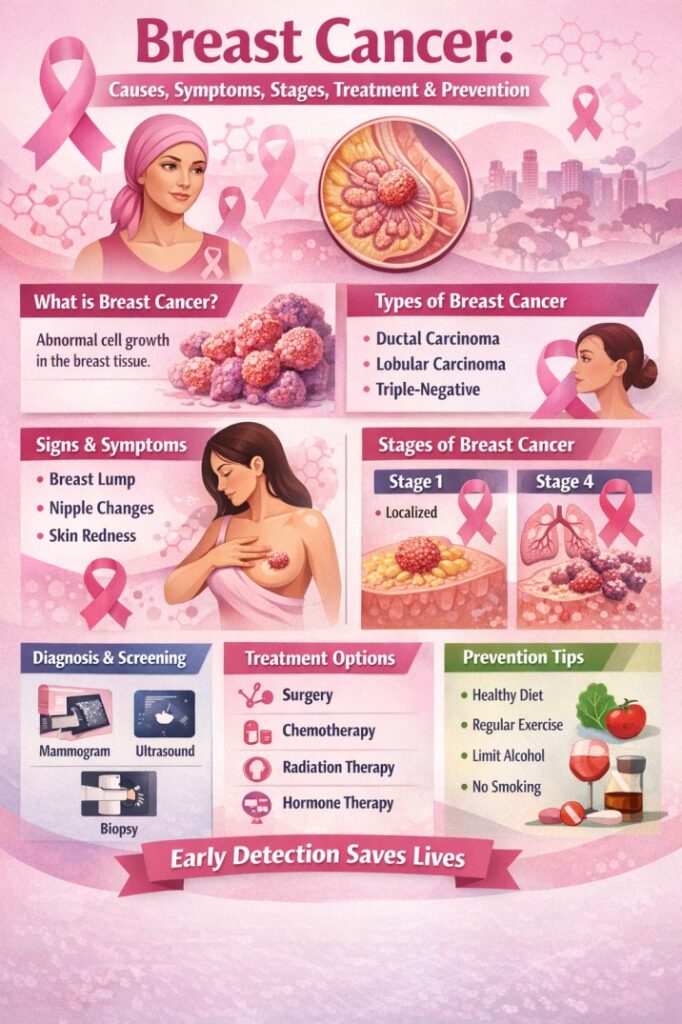
What is Breast Cancer
Breast cancer is a disease in which cells in the breast grow abnormally and form tumors. Normally, body cells grow and divide in a controlled way. However, cancer cells grow uncontrollably and do not die when they should.
Most breast cancers begin in the milk ducts or milk-producing glands of the breast. As the tumor grows, it may invade nearby tissues. Eventually, if untreated, it can spread to other parts of the body through the lymphatic system or bloodstream.
Breast cancer can affect people of all ages. Nevertheless, it is most commonly diagnosed in women over the age of 40. Fortunately, early detection through screening greatly improves treatment success.
Types of Breast Cancer
There are several types of breast cancer, and each type behaves differently. Therefore, doctors determine the type before planning treatment.
Ductal Carcinoma in Situ (DCIS)
Ductal carcinoma in situ is a non-invasive form of breast cancer. It begins in the milk ducts but does not spread to surrounding tissues.
Although DCIS is not immediately life-threatening, it can eventually develop into invasive cancer if untreated. Therefore, doctors usually recommend early treatment.
Invasive Ductal Carcinoma (IDC)
Invasive ductal carcinoma is the most common type of breast cancer. It starts in the milk ducts and then spreads into nearby breast tissue.
Moreover, this type can also spread to lymph nodes and other parts of the body if not detected early.
Invasive Lobular Carcinoma (ILC)
Invasive lobular carcinoma begins in the milk-producing glands called lobules. After developing there, it can spread to surrounding tissues.
Compared to other forms, this type may be harder to detect through mammography. Therefore, doctors often use additional imaging tests.
Triple-Negative Breast Cancer
Triple-negative breast cancer is an aggressive form that lacks three common receptors found in many breast cancers.
Because of this, hormone therapy and targeted treatments are less effective. However, chemotherapy is often used as a primary treatment.
Inflammatory Breast Cancer
Inflammatory breast cancer is a rare but fast-growing type. It causes swelling, redness, and warmth in the breast.
Unlike other forms, it may not always form a lump. Therefore, it can sometimes be mistaken for an infection.
Causes of Breast Cancer
The exact cause of breast cancer is not always clear. However, researchers believe it occurs due to genetic mutations that affect normal cell growth.
Several factors may contribute to these mutations, including:
Genetic changes in DNA
Hormonal influences
Environmental exposure
Lifestyle habits
Moreover, certain inherited gene mutations, such as BRCA1 and BRCA2, significantly increase the risk. However, not all people with these mutations develop cancer.
Therefore, while genetics play a role, lifestyle and environmental factors also contribute.
Risk Factors of Breast Cancer
Although anyone can develop breast cancer, certain factors increase the risk.
Common risk factors include:
Increasing age
Family history of breast cancer
Genetic mutations (BRCA1 and BRCA2)
Early menstruation or late menopause
Hormone replacement therapy
Obesity
Lack of physical activity
Alcohol consumption
In addition, previous radiation exposure to the chest may also increase risk.
However, having one or more risk factors does not necessarily mean a person will develop breast cancer.
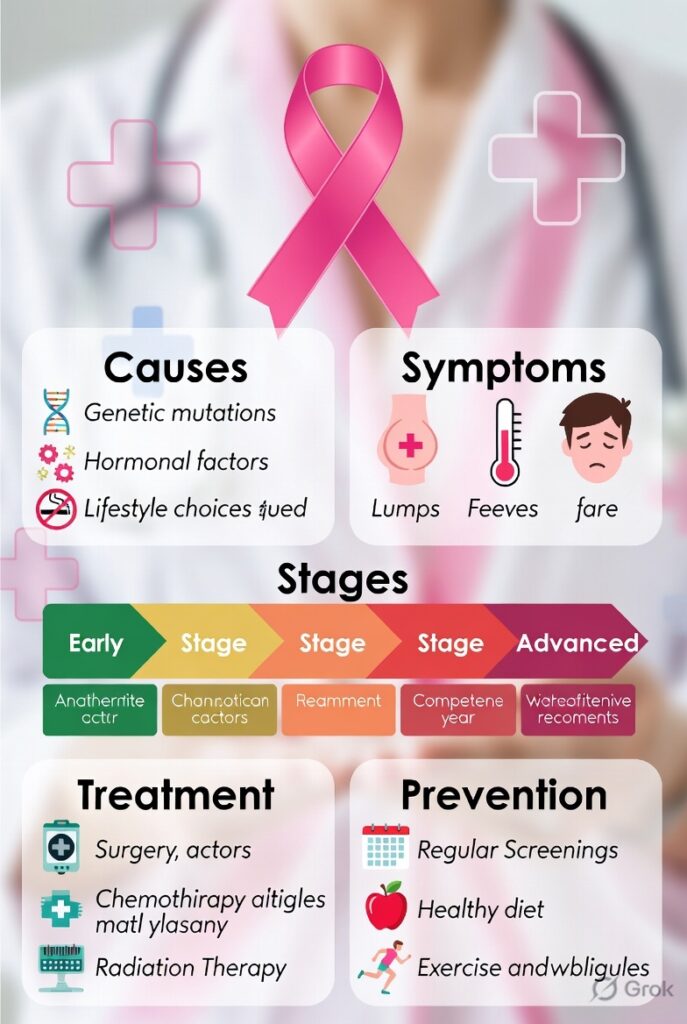
Signs and Symptoms of Breast Cancer
Recognizing early symptoms of breast cancer is extremely important. Early detection can greatly improve treatment outcomes.
Common symptoms include:
A lump or thickening in the breast
Changes in breast size or shape
Nipple discharge
Skin dimpling or redness
Pain in the breast or nipple
Inverted nipple
Swelling in the underarm area
However, not all breast lumps are cancerous. Nevertheless, any unusual change should be checked by a doctor.
Diagnosis and Screening Methods
Early diagnosis of breast cancer greatly increases survival rates. Therefore, doctors recommend regular screening, especially for women over 40.
Mammography
Mammography is an X-ray imaging technique used to detect breast abnormalities. It can identify tumors before symptoms appear.
Therefore, routine mammograms are considered one of the most effective screening methods.
Ultrasound
Ultrasound uses sound waves to produce images of breast tissue. It helps doctors determine whether a lump is solid or filled with fluid.
Moreover, it is often used alongside mammography.
Biopsy
A biopsy involves removing a small sample of breast tissue for laboratory testing.
This test confirms whether the abnormal cells are cancerous.
Self-Examination
Breast self-examination allows individuals to check for lumps or unusual changes.
Although it does not replace medical screening, it helps people become familiar with their bodies and notice changes early.
Stages of Breast Cancer
Doctors classify breast cancer into stages based on tumor size and spread.
Stage 0
Cancer cells are confined within ducts and have not spread.
Stage 1
The tumor is small and has not spread far.
Stage 2
Cancer may have spread to nearby lymph nodes.
Stage 3
The tumor is larger and has spread further into surrounding tissues.
Stage 4
Cancer has spread to distant organs such as the lungs, liver, or bones.
Earlier stages generally have better treatment outcomes.
Treatment Options for Breast Cancer
Treatment for breast cancer depends on the type, stage, and overall health of the patient.
Surgery
Surgery is often the first treatment option. Doctors may remove the tumor or the entire breast depending on severity.
Common procedures include:
Lumpectomy
Mastectomy
Chemotherapy
Chemotherapy uses powerful drugs to destroy cancer cells.
It is often used before or after surgery to reduce the risk of recurrence.
Radiation Therapy
Radiation therapy uses high-energy rays to destroy cancer cells in the affected area.
This treatment is often used after surgery.
Hormone Therapy
Hormone therapy blocks hormones that help certain breast cancers grow.
Therefore, it is effective for hormone-receptor-positive cancers.
Targeted Therapy
Targeted therapy attacks specific proteins that help cancer cells grow.
As a result, it can slow or stop cancer progression with fewer side effects.
Prevention and Risk Reduction
Although breast cancer cannot always be prevented, several lifestyle changes may reduce risk.
Helpful prevention strategies include:
Maintaining a healthy weight
Exercising regularly
Limiting alcohol consumption
Eating a balanced diet
Avoiding smoking
Getting regular medical screenings
In addition, breastfeeding may slightly reduce breast cancer risk.
Living With Breast Cancer
Living with breast cancer can be emotionally and physically challenging. However, support systems play an important role in recovery.
Patients often benefit from:
Emotional support from family and friends
Counseling or therapy
Support groups
Healthy lifestyle habits
Moreover, regular follow-up care is important to monitor recovery and detect recurrence early.
Importance of Breast Cancer Awareness
Raising breast cancer awareness helps people recognize symptoms early and seek medical help sooner.
Awareness campaigns encourage:
Regular screenings
Self-examinations
Education about symptoms
Support for patients and survivors
As a result, many lives can be saved through early detection and proper treatment.
FAQ About Breast Cancer
1. What is the first sign of breast cancer?
The most common first sign is a painless lump in the breast. However, other changes such as nipple discharge or skin dimpling may also occur.
2. Can men get breast cancer?
Yes, although rare, men can develop breast cancer. Therefore, men should also be aware of symptoms.
3. Is breast cancer curable?
Many cases of breast cancer are treatable and even curable if detected early.
4. At what age should women start screening?
Doctors generally recommend mammography screening starting around age 40, although guidelines may vary.
5. Can lifestyle changes reduce breast cancer risk?
Yes. Healthy habits such as exercise, a balanced diet, and limited alcohol consumption can help lower the risk.
Conclusion
Breast cancer remains one of the most common cancers worldwide. However, significant medical advancements have improved diagnosis, treatment, and survival rates. Therefore, awareness and education are essential in the fight against this disease.
Early detection plays a crucial role in successful treatment. Regular screenings, including mammography and self-examinations, help identify abnormalities at an early stage. Moreover, understanding the symptoms allows individuals to seek medical attention quickly.
In addition, adopting a healthy lifestyle can reduce the risk of developing breast cancer. Maintaining a balanced diet, exercising regularly, limiting alcohol intake, and avoiding smoking are all beneficial steps.
Finally, spreading breast cancer awareness can save lives. When people are informed about the disease, they are more likely to detect warning signs early and seek timely medical care. Therefore, education, prevention, and early detection remain the most powerful tools in reducing the impact of breast cancer worldwide.

Water Filtration Science Project: Complete Student Guide
Water Filtration Science Project A water filtration science project is a simple and interesting experiment that helps students understand how

Back to School Essay: A New Beginning for Students
Back to School Essay: A New Beginning for Students The end of summer vacation brings a special feeling to students.
Improve Credit Score Fast: 15 Proven Strategies That Really Work

How to Build a $100,000 Investment Portfolio From Scratch (2026)
Growing your first $100,000 can feel overwhelming. Maybe you’re wondering whether you should buy stocks, invest in ETFs, contribute more
Oral Cancer: Causes, Symptoms & Prevention Guide
Oral Cancer is a serious health condition, and it affects thousands of people every year. Moreover, it can develop in

Passive Income Ideas for Beginners With No Money (Start Today & Earn Smart)
Introduction Passive Income Ideas for Beginners With No Money. Everyone wants to earn money easily. However, most people think money is
Pingback: Mouth Cancer: Symptoms, Causes, Treatment & Prevention