Mouth Cancer
Introduction to Mouth Cancer
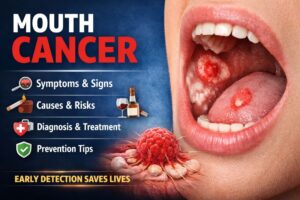
Mouth Cancer is a serious health condition that affects thousands of people around the world every year. It develops in the tissues of the mouth and can spread rapidly if not diagnosed early. Fortunately, with early detection and proper treatment, the chances of recovery improve significantly.
In recent years, awareness about Mouth Cancer has increased because the disease is strongly linked to lifestyle habits such as tobacco use and alcohol consumption. According to global health reports, oral cancers account for nearly 3% of all cancers worldwide. However, in countries where tobacco chewing is common, the risk becomes much higher.
Moreover, many people ignore the early symptoms of Mouth Cancer because they may appear minor at first. Small sores, persistent mouth pain, or unusual lumps can easily be mistaken for normal mouth problems. As a result, the disease often gets diagnosed in advanced stages.
Therefore, understanding the causes, symptoms, risk factors, and prevention strategies of Mouth Cancer is extremely important. This article explains everything you need to know in simple language so that awareness can help save lives.
What is Mouth Cancer?
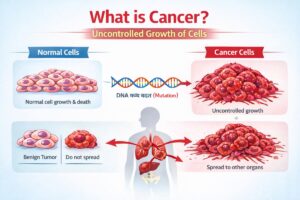
Mouth Cancer, also known as oral cancer, refers to cancer that develops in any part of the mouth. It occurs when cells in the mouth grow uncontrollably and form tumors.
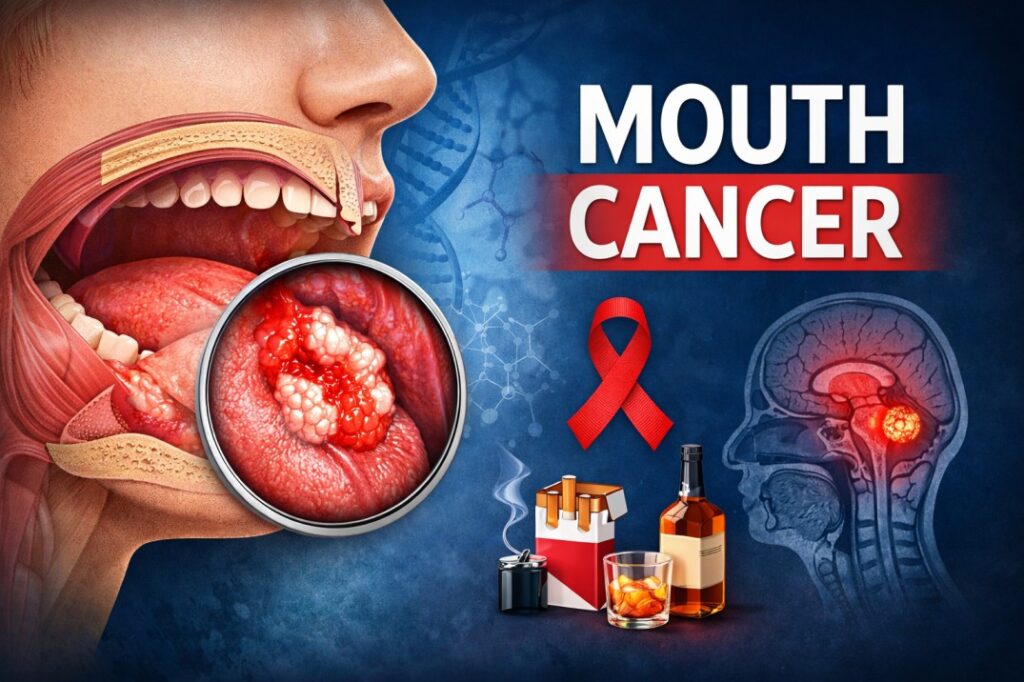
Mouth Cancer can affect several areas such as:
Lips
Tongue
Gums
Inner lining of the cheeks
Roof of the mouth (palate)
Floor of the mouth under the tongue
These cancerous cells can gradually spread to nearby tissues and even to other parts of the body if not treated early. Therefore, early detection plays a crucial role in improving survival rates.
Additionally, Mouth Cancer is considered a type of head and neck cancer, which means it shares similarities with cancers affecting the throat and related regions.
Causes of Mouth Cancer
Mouth Cancer develops due to genetic mutations in cells. However, several lifestyle habits and environmental factors increase the risk significantly.
Tobacco Use
Tobacco is the leading cause of Mouth Cancer. Both smoking and smokeless tobacco products are harmful.
Common tobacco products include:
Cigarettes
Bidis
Cigars
Chewing tobacco
Gutkha and pan masala
These products contain carcinogenic chemicals that damage the cells of the mouth. Over time, repeated exposure leads to abnormal cell growth and cancer.
In fact, studies show that around 80–90% of Mouth Cancer cases are linked to tobacco use.
Alcohol Consumption
Excessive alcohol consumption also increases the risk of Mouth Cancer. Alcohol irritates the tissues inside the mouth and throat.
Moreover, when alcohol is combined with tobacco, the risk multiplies significantly. For example, a person who both drinks heavily and smokes has a much higher chance of developing Mouth Cancer compared to someone who does neither.
HPV Infection
Another important cause of Mouth Cancer is infection with the Human Papillomavirus (HPV).
HPV is a common virus that spreads through close contact. Some strains of HPV are known to cause cancers in the mouth and throat.
However, HPV-related Mouth Cancer is more common in younger individuals and may occur even without tobacco use.
Risk Factors of Mouth Cancer
Certain factors increase the likelihood of developing Mouth Cancer. While having these risk factors does not guarantee cancer, they do increase the risk.
Major risk factors include:
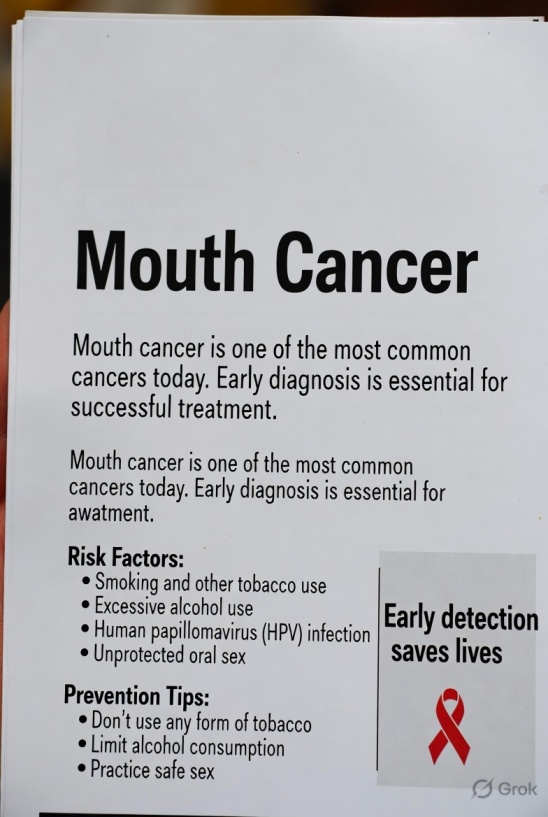
Tobacco use (smoking or chewing)
Heavy alcohol consumption
HPV infection
Poor oral hygiene
Excessive sun exposure on lips
Weak immune system
Family history of cancer
Age above 40 years
Additionally, nutritional deficiencies and a diet low in fruits and vegetables may also contribute to increased risk.
Therefore, adopting healthy habits and maintaining good oral hygiene can significantly reduce the chances of developing Mouth Cancer.
Early Signs and Symptoms of Mouth Cancer
Recognizing the early symptoms of Mouth Cancer is extremely important because early diagnosis improves treatment success.
Common symptoms include:
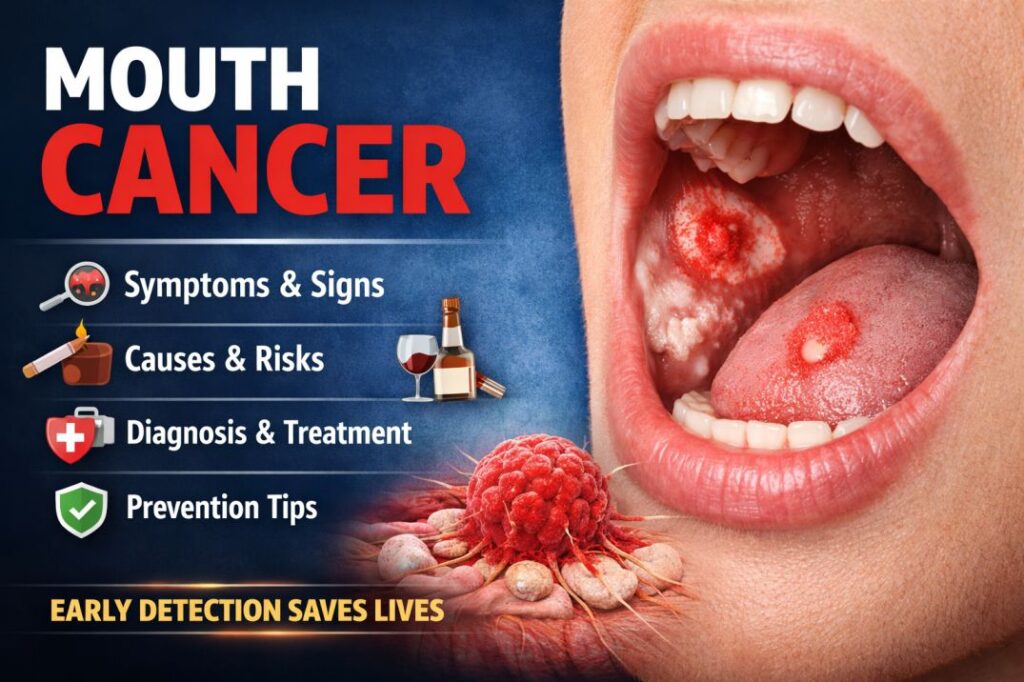
A sore in the mouth that does not heal
Red or white patches inside the mouth
Persistent mouth pain
Difficulty chewing or swallowing
A lump or thickening in the mouth
Loose teeth without dental cause
Numbness in the mouth or lips
Persistent sore throat
Difficulty speaking
Additionally, some people may experience unexplained weight loss or ear pain.
If any of these symptoms last for more than two weeks, it is important to consult a doctor immediately.
Stages of Mouth Cancer
Mouth Cancer is classified into stages based on tumor size and spread. Doctors use staging to determine the best treatment plan.
The stages include:
Stage 1
Stage 2
Tumor between 2–4 cm
No spread to lymph nodes
Stage 3
Stage 4
Early-stage Mouth Cancer is much easier to treat. However, advanced stages require more aggressive treatment.
How Mouth Cancer is Diagnosed
Doctors use several tests to diagnose Mouth Cancer accurately.
Common diagnostic methods include:
Physical Examination
Doctors examine the mouth, tongue, and throat for abnormal lumps or patches.
Biopsy
A small sample of tissue is removed and tested for cancer cells.
Imaging Tests
These may include:
X-rays
CT scans
MRI scans
PET scans
These tests help determine the size and spread of the tumor.
Early diagnosis through regular dental checkups can greatly increase survival chances.
Treatment Options for Mouth Cancer
Treatment for Mouth Cancer depends on the stage, size of the tumor, and overall health of the patient.
Common treatment options include surgery, radiation therapy, chemotherapy, and targeted therapy.
Surgery
Surgery is often the first treatment option for Mouth Cancer.
During surgery, doctors remove:
In advanced cases, reconstructive surgery may also be required to restore speech and chewing ability.
Radiation Therapy
Radiation therapy uses high-energy radiation to destroy cancer cells.
It may be used:
After surgery to eliminate remaining cancer cells
As the main treatment for early-stage Mouth Cancer
Along with chemotherapy for advanced cases
Radiation therapy can effectively control cancer growth.
Chemotherapy
Chemotherapy involves the use of powerful drugs to kill cancer cells.
It is usually used when:
Although chemotherapy can be effective, it may also cause side effects such as fatigue, nausea, and hair loss.
Targeted Therapy
Targeted therapy is a newer treatment approach.
Unlike chemotherapy, it specifically targets cancer cells without damaging many healthy cells. Therefore, it often causes fewer side effects.
Doctors may recommend targeted therapy in advanced Mouth Cancer cases.
Complications of Mouth Cancer
If Mouth Cancer is not treated early, it can lead to serious complications.
These may include:
Difficulty eating and swallowing
Speech problems
Facial disfigurement
Spread of cancer to other organs
Severe pain and infections
Additionally, emotional and psychological challenges are also common among cancer patients.
Therefore, early treatment is crucial.
Prevention of Mouth Cancer
Although not all cases can be prevented, many Mouth Cancer cases are linked to lifestyle choices. Therefore, making healthy changes can reduce risk significantly.
Prevention tips include:
Quit smoking and tobacco use
Limit alcohol consumption
Maintain good oral hygiene
Eat a healthy diet rich in fruits and vegetables
Protect lips from excessive sunlight
Get vaccinated against HPV
Visit the dentist regularly
Additionally, early screening can help detect abnormal changes before they become cancerous.
Mouth Cancer Survival Rate
The survival rate of Mouth Cancer depends largely on early detection.
According to medical studies:
Early-stage Mouth Cancer has a survival rate of about 80–90%.
However, advanced-stage Mouth Cancer survival may drop to 30–40%.
Therefore, regular health checkups and awareness of symptoms are extremely important.
Early diagnosis saves lives.
When to See a Doctor
You should consult a doctor if you experience:
Additionally, people who use tobacco or alcohol regularly should undergo periodic oral screening.
Prompt medical evaluation can lead to early diagnosis and successful treatment.
Living with Mouth Cancer
Living with Mouth Cancer can be physically and emotionally challenging. However, proper support and treatment can help patients maintain a good quality of life.
Helpful strategies include:
Following the doctor’s treatment plan
Maintaining a nutritious diet
Joining cancer support groups
Seeking psychological counseling
Staying physically active
Moreover, family support plays a vital role in recovery and emotional strength.
Many survivors go on to live healthy and fulfilling lives after treatment.
Conclusion
Mouth Cancer is a serious but preventable and treatable disease when detected early. Unfortunately, many people ignore early symptoms, which allows the disease to progress to advanced stages.
However, awareness can make a huge difference. By avoiding tobacco, limiting alcohol, maintaining good oral hygiene, and seeking regular medical checkups, the risk of Mouth Cancer can be greatly reduced.
Furthermore, recognizing early warning signs and consulting a doctor immediately can significantly improve survival rates.
In conclusion, education and prevention are the most powerful tools in the fight against Mouth Cancer. With early diagnosis and proper treatment, many lives can be saved.