Early Symptoms of Diabetes – Diabetes is one of the most common health conditions affecting millions of people worldwide. It occurs when the body cannot properly control blood sugar levels. As a result, glucose builds up in the bloodstream and can cause serious health problems over time.
However, many people do not realize they have diabetes until the condition becomes severe. Therefore, recognizing the early symptoms of diabetes is extremely important. Early detection can help prevent complications such as heart disease, nerve damage, kidney problems, and vision loss.
In many cases, the body gives warning signs long before diabetes is diagnosed. These symptoms may seem minor at first. Nevertheless, paying attention to them can help you seek medical advice early and manage the condition effectively.
In this article, we will explore the 10 early symptoms of diabetes you should not ignore, along with risk factors, prevention tips, and when to consult a doctor.
What is Diabetes?
Diabetes is a chronic health condition that affects how the body processes glucose (sugar). Glucose is an important source of energy for our cells. However, insulin is required to move glucose from the bloodstream into the cells.
When the body does not produce enough insulin, or when it cannot use insulin properly, blood sugar levels increase. As a result, this leads to diabetes.
There are three main types of diabetes:
Type 1 Diabetes
Type 1 diabetes occurs when the immune system mistakenly attacks insulin-producing cells in the pancreas. As a result, the body produces little or no insulin. People with Type 1 diabetes must take insulin regularly.
Type 2 Diabetes
Type 2 diabetes is the most common type. In this condition, the body becomes resistant to insulin or does not produce enough insulin. Lifestyle factors such as poor diet and lack of exercise often contribute to this type.
Gestational Diabetes
Gestational diabetes occurs during pregnancy. Although it usually disappears after childbirth, it increases the risk of developing Type 2 diabetes later in life.
10 Early Symptoms of Diabetes You Should Not Ignore
Recognizing the early symptoms of diabetes can help detect the condition before it causes serious complications. Below are the most common warning signs.
Frequent Urination – Early Symptoms of Diabetes
Frequent urination is one of the most common early symptoms of diabetes.
When blood sugar levels are high, the kidneys work harder to remove excess glucose from the body. As a result, the body produces more urine.
You may notice:
Frequent trips to the bathroom
Waking up at night to urinate
Increased urine output
Therefore, if you suddenly find yourself urinating more often than usual, it may be worth checking your blood sugar levels.
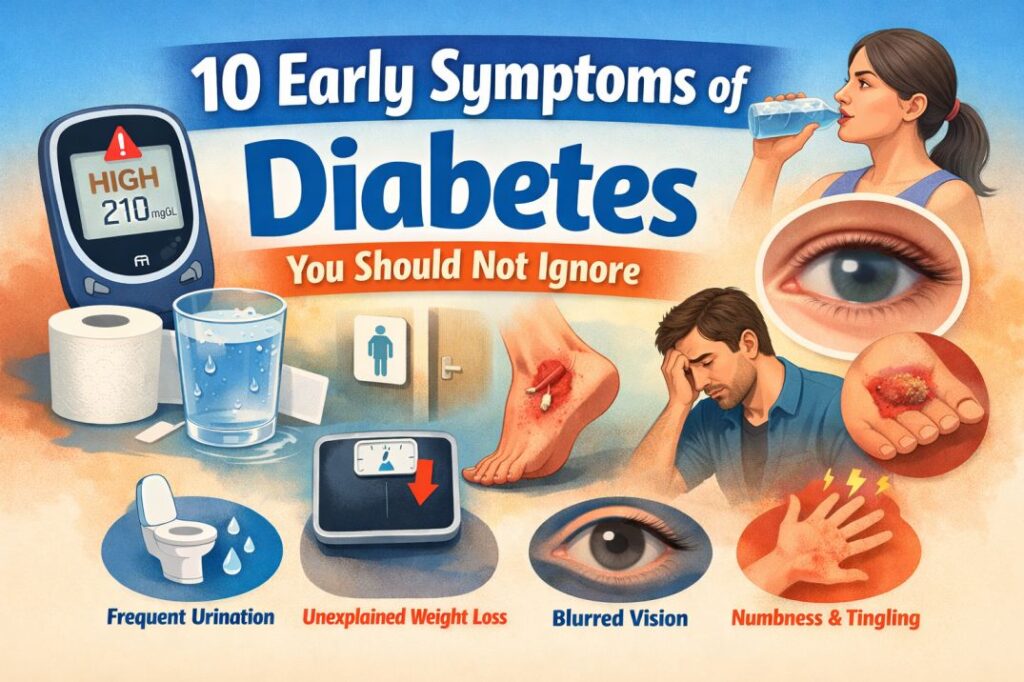
Excessive Thirst – Early Symptoms of Diabetes
Excessive thirst often occurs alongside frequent urination.
When the body loses fluids through increased urination, it tries to compensate by making you feel thirsty. Consequently, you may feel the need to drink water constantly.
Some people may also experience:
Dry mouth
Persistent dehydration
Increased fluid intake without relief
If thirst remains even after drinking plenty of water, it could be a warning sign of diabetes.
Early Symptoms of Diabetes – Extreme Hunger
Another common early symptom of diabetes is extreme hunger.
Even after eating, the body may not be able to use glucose effectively due to insulin problems. Therefore, cells do not receive enough energy.
As a result, the brain signals hunger more frequently.
You may experience:
Constant hunger
Cravings for sugary foods
Feeling hungry shortly after meals
Unexplained Weight Loss is one of the most common Early Symptoms of Diabetes
Sudden weight loss without trying can also indicate diabetes.
When the body cannot use glucose for energy, it begins breaking down fat and muscle instead. Consequently, this leads to weight loss.
This symptom is particularly common in Type 1 diabetes. However, it can also appear in Type 2 diabetes.
If you lose weight without changes in diet or exercise, it is advisable to consult a doctor.
Fatigue and Weakness in Early Symptoms of Diabetes
Feeling tired all the time can be another early warning sign.
When glucose cannot enter the cells properly, the body lacks energy. As a result, people with diabetes often experience fatigue and weakness.
You may notice:
Persistent tiredness
Difficulty concentrating
Lack of energy during the day
Although fatigue can have many causes, it should not be ignored if it occurs alongside other symptoms.
Blurred Vision as an Early Symptom of Diabetes
High blood sugar levels can affect the eyes and lead to blurred vision.
Excess glucose in the bloodstream causes fluid shifts in the eye lenses. Consequently, this affects the ability to focus properly.
In some cases, blurred vision may come and go. However, if it persists, it could indicate diabetes.
Early detection is important because untreated diabetes can eventually cause serious eye problems.
Slow Healing Wounds – Warning Sign and Early Symptom of Diabetes
Another important sign of diabetes is slow healing of cuts and wounds.
High blood sugar levels can damage blood vessels and reduce blood circulation. As a result, the body’s ability to heal becomes slower.
For example, you may notice:
Cuts that take longer to heal
Frequent skin infections
Delayed recovery from injuries
This symptom should not be ignored, especially if it happens frequently.
Tingling or Numbness in Hands and Feet – Early Symptoms of Diabetes
Many people with diabetes experience tingling or numbness in their hands and feet.
This occurs because high blood sugar can damage nerves over time. This condition is known as diabetic neuropathy.
Common sensations include:
Tingling
Burning sensation
Numbness in fingers or toes
Although this symptom often appears later, it can sometimes develop in the early stages.
Frequent Infections Caused by Early Symptoms of Diabetes
People with diabetes are more prone to infections.
High blood sugar weakens the immune system. Therefore, the body becomes less effective at fighting bacteria and viruses.
Common infections include:
Skin infections
Urinary tract infections
Gum infections
Yeast infections
If infections occur repeatedly, it may indicate high blood sugar levels.
Dark Skin Patches – A Hidden Early Symptom of Diabetes
Dark patches of skin, especially around the neck, armpits, or groin, can be a warning sign of diabetes.
This condition is called Acanthosis Nigricans. It often occurs due to insulin resistance.
The skin may appear:
Darker than surrounding areas
Thickened or velvety
Slightly raised
Although it is not harmful by itself, it may signal an underlying metabolic problem.
Who is at Risk of Early Symptoms of Diabetes?
Certain factors increase the risk of developing diabetes. Therefore, people with these risk factors should pay close attention to the early symptoms of diabetes.
Common risk factors include:
Obesity
Being overweight significantly increases the risk of Type 2 diabetes.
Family History
If a close family member has diabetes, your chances of developing it may be higher.
Lack of Physical Activity
A sedentary lifestyle can lead to insulin resistance and increased blood sugar levels.
Poor Diet
Diets high in sugar, processed foods, and unhealthy fats increase diabetes risk.
Age
Although diabetes can occur at any age, the risk increases after the age of 45.
When Should You See a Doctor for Early Symptoms of Diabetes?
You should consult a doctor if you experience multiple early symptoms of diabetes, especially:
Frequent urination
Constant thirst
Sudden weight loss
Extreme fatigue
Blurred vision
Early diagnosis can help manage diabetes effectively and prevent serious complications.
Doctors usually diagnose diabetes using simple tests such as:
Fasting blood sugar test
HbA1c test
Oral glucose tolerance test
These tests help determine how well your body controls blood sugar.
How to Prevent Diabetes
Although some types of diabetes cannot be prevented, lifestyle changes can significantly reduce the risk of Type 2 diabetes.
Maintain a Healthy Diet
Eating balanced meals helps regulate blood sugar levels.
Focus on:
Fruits and vegetables
Whole grains
Lean proteins
Healthy fats
At the same time, limit sugary drinks and processed foods.
Exercise Regularly
Physical activity helps the body use insulin more efficiently.
Experts recommend at least 30 minutes of moderate exercise most days of the week.
Maintain a Healthy Weight
Even a small weight loss can reduce the risk of diabetes.
Therefore, maintaining a healthy weight is one of the most effective prevention strategies.
Regular Health Checkups
Routine health checkups help detect diabetes early.
If you have risk factors, regular blood sugar testing is especially important.
Conclusion: Do Not Ignore Early Symptoms of Diabetes
Diabetes is a serious health condition, but early detection can make a huge difference. Recognizing the early symptoms of diabetes allows people to seek treatment before complications develop.
Common warning signs such as frequent urination, excessive thirst, fatigue, blurred vision, and slow healing wounds should never be ignored.
Moreover, understanding your risk factors and maintaining a healthy lifestyle can significantly reduce the chances of developing diabetes.
If you notice any of these symptoms, it is always best to consult a healthcare professional. Early diagnosis and proper management can help you live a healthy and active life.
FAQ (Frequently Asked Questions)
What are the first warning signs of diabetes?
The first warning signs often include frequent urination, excessive thirst, constant hunger, fatigue, and blurred vision. These symptoms may appear gradually.
Can diabetes be detected early?
Yes. Diabetes can be detected early through blood tests such as fasting blood sugar, HbA1c, and glucose tolerance tests.
How do you test for diabetes?
Doctors usually diagnose diabetes using blood tests that measure glucose levels in the bloodstream.
Is fatigue an early symptom of diabetes?
Yes. Fatigue is a common early symptom because the body cannot properly use glucose for energy, leading to persistent tiredness.
10 Early Symptoms of Diabetes You Should Not Ignore
Early Symptoms of Diabetes – Diabetes is one of the most common health conditions affecting millions of people worldwide. It

Mouth Cancer: Symptoms, Causes, Treatment & Prevention
Mouth Cancer Introduction to Mouth Cancer Mouth Cancer is a serious health condition that affects thousands of people around the

Breast Cancer: Causes, Symptoms, Stages, Treatment, and Prevention Guide
Introduction Breast cancer is one of the most common types of cancer affecting women around the world. However, it can

Ganesh Chaturthi: Maharashtra’s Famous Festival | Started by Lokmanya Tilak
🪔 Sarvajanik Ganeshotsav : Maharashtra’s Famous Festival Ganeshotsav Introduction Ganeshotsav is one of the most famous festivals in Maharashtra. Every

What is Cancer? Causes, Symptoms, Types and Prevention
Cancer is one of the most serious health conditions affecting millions of people worldwide. In fact, it has become a

How to Work Smarter: 10 Proven Tips for Boosting Productivity
Work Smarter – In today’s fast-paced world, the key to success lies not in working harder but in working smarter.